You’ve probably noticed how quickly kids tune out when something feels like homework—yet they’ll spend hours puzzling through a tricky game without complaint. That’s because the best critical thinking games disguise mental heavy lifting as pure entertainment. They build logic, spatial reasoning, and problem-solving skills while your child stays completely absorbed in play. Whether you’re after early math concepts, deductive reasoning, or complex strategy, there’s a game designed to sharpen those exact skills.
| Labyrinth 3D Maze Cube Brain Training Game |  | Best Solo Challenge | Primary Skill Focus: Spatial reasoning & logical thinking | Recommended Age Range: Teens and adults | Player Count: 1 or multiple players | VIEW LATEST PRICE | Read Our Analysis |
| Escape Room The Game Family Edition |  | Best Family Experience | Primary Skill Focus: Teamwork & problem-solving | Recommended Age Range: Family, kids & teens | Player Count: Multiple players (team-based) | VIEW LATEST PRICE | Read Our Analysis |
| BSIRI 9-in-1 Wooden Brain Teaser Puzzle Set |  | Most Portable | Primary Skill Focus: Logic, patience & spatial awareness | Recommended Age Range: Adults, teens, seniors (all ages) | Player Count: Individual (solo play) | VIEW LATEST PRICE | Read Our Analysis |
| Think Fun Zingo 1-2-3 |  | Best For Preschoolers | Primary Skill Focus: Counting & number sense | Recommended Age Range: Not specified (early learners implied) | Player Count: Multiple players | VIEW LATEST PRICE | Read Our Analysis |
| 52 Critical Thinking Flash Cards by Harvard Educator | 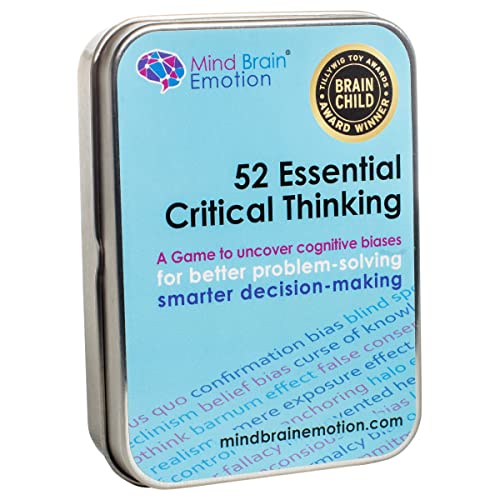 | Best For Teens | Primary Skill Focus: Critical thinking & bias detection | Recommended Age Range: Teens and adults | Player Count: Individual or group (10 levels) | VIEW LATEST PRICE | Read Our Analysis |
| That’s Just Wrong! Critical Thinking & Debate Game |  | Best For Debate | Primary Skill Focus: Reasoning & argumentation | Recommended Age Range: Teens (and families, classrooms) | Player Count: Multiple players (groups, classrooms) | VIEW LATEST PRICE | Read Our Analysis |
| Learning Resources Mental Blox Critical Thinking Game | 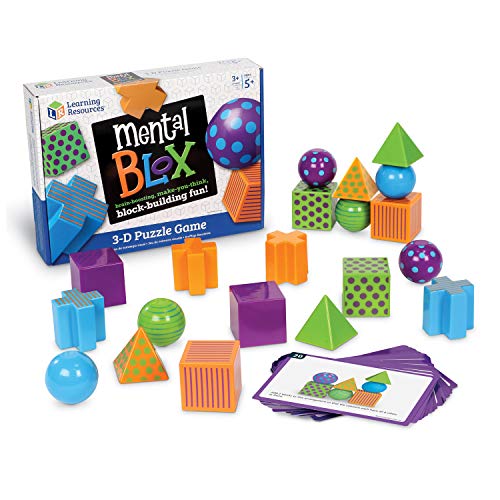 | Best For Beginners | Primary Skill Focus: Analytical & critical thinking | Recommended Age Range: Ages 5+ | Player Count: Individual or group | VIEW LATEST PRICE | Read Our Analysis |
| Who What Why Conversation Cards for Kids (Ages 4+) |  | Best For Toddlers | Primary Skill Focus: Emotional & social intelligence | Recommended Age Range: Ages 4+ | Player Count: Individual or group (with adult) | VIEW LATEST PRICE | Read Our Analysis |
| Mind Brain Emotion 52 Essential Life Skills Game |  | Best Life Skills | Primary Skill Focus: Life skills & responsibility | Recommended Age Range: Ages 5-10 (kids, teens, adults) | Player Count: Individual or family | VIEW LATEST PRICE | Read Our Analysis |
| MindWare Logic Links Puzzle Games for Kids & Adults |  | Best Logic Training | Primary Skill Focus: Deductive reasoning & spatial learning | Recommended Age Range: Ages 6-15 | Player Count: Individual or group | VIEW LATEST PRICE | Read Our Analysis |
More Details on Our Top Picks
Labyrinth 3D Maze Cube Brain Training Game
The Labyrinth 3D Maze Cube transforms spatial reasoning into an addictive challenge for puzzle enthusiasts who crave screen-free entertainment. You’ll guide a ball through precision-engineered tracks that demand concentration and logical thinking with every twist. The high-quality ABS construction ensures smooth gameplay while withstanding drops and repeated use. Whether you’re competing against friends or beating your best time solo, this brain teaser keeps you engaged without screens. It’s perfect for family game nights, strengthening bonds through friendly competition. The durable, non-toxic design makes it ideal for teens and adults seeking cognitive training that actually feels fun rather than educational.
- Primary Skill Focus:Spatial reasoning & logical thinking
- Recommended Age Range:Teens and adults
- Player Count:1 or multiple players
- Play Format:Physical 3D maze puzzle
- Educational Setting Suitability:Home, family gatherings
- Gift Suitability:Birthdays, holidays, Christmas, graduations
- Additional Feature:Precision-designed track system
- Additional Feature:Spherical drop-resistant structure
- Additional Feature:Beat-your-best-time gameplay
Escape Room The Game Family Edition
Looking for a way to unite your entire household around brain-teasing challenges? Escape Room The Game Family Edition brings three thrilling time-travel mysteries straight to your table. You’ll race against the Chrono Decoder’s 60-minute countdown, working through The Present, The Past, and The Future adventures. This isn’t a solo mission—every player must contribute their problem-solving skills because you’ll win together or lose together. The electronic decoder creates authentic escape room atmosphere while dispensing hints when you’re stuck. With 16 keys, hint cards, and unpredictable puzzles, you’re facing a genuinely demanding experience that transforms family game night into an adrenaline-fueled test of teamwork.
- Primary Skill Focus:Teamwork & problem-solving
- Recommended Age Range:Family, kids & teens
- Player Count:Multiple players (team-based)
- Play Format:Board game with electronic decoder
- Educational Setting Suitability:Home, family game nights
- Gift Suitability:Not explicitly mentioned
- Additional Feature:Electronic Chrono Decoder
- Additional Feature:60-minute countdown timer
- Additional Feature:Time travel theme
BSIRI 9-in-1 Wooden Brain Teaser Puzzle Set
For puzzle enthusiasts who crave variety without cluttering their space, this handcrafted wooden set delivers nine distinct brain teasers in one compact package. Each puzzle challenges your logic, patience, and spatial awareness through intricate interlocking designs that’ll keep your mind sharp and engaged.
You’ll appreciate the smooth edges and natural wood construction that makes these portable companions perfect for your desk, travel bag, or family game nights. Whether you’re seeking stress relief at work or intellectual stimulation at home, these impossible-level challenges improve your concentration and problem-solving skills. They’re also thoughtful gifts for birthdays, holidays, or anyone who enjoys relaxing fun that genuinely stimulates their brain.
- Primary Skill Focus:Logic, patience & spatial awareness
- Recommended Age Range:Adults, teens, seniors (all ages)
- Player Count:Individual (solo play)
- Play Format:Wooden interlocking puzzles
- Educational Setting Suitability:Home, classrooms, office
- Gift Suitability:Birthdays, holidays, weddings, housewarming
- Additional Feature:9 puzzles included
- Additional Feature:Natural wood construction
- Additional Feature:Portable desk companion
Think Fun Zingo 1-2-3
Young learners between ages 4 and 8 will thrive with Think Fun Zingo 1-2-3, a fast-paced matching game that transforms early math concepts into exciting competition. You’ll appreciate how this stealth learning experience develops counting, simple addition, number sense, and word recognition without your child realizing they’re studying.
The set includes one Zinger, six double-sided cards, and 72 double-sided tiles that keep gameplay dynamic and engaging. You can start playing immediately thanks to the clear, high-quality instruction manual that makes learning the rules effortless. Your young mathematician will build critical skills while enjoying genuine excitement and fun.
- Primary Skill Focus:Counting & number sense
- Recommended Age Range:Not specified (early learners implied)
- Player Count:Multiple players
- Play Format:Tile-matching bingo game
- Educational Setting Suitability:Home, homeschool
- Gift Suitability:Holidays, birthdays, Christmas, Easter
- Additional Feature:Double-sided tiles/cards
- Additional Feature:Zinger dispenser included
- Additional Feature:Stealth learning experience
52 Critical Thinking Flash Cards by Harvard Educator
Want to build mental armor against manipulation and faulty reasoning? These 52 flash cards by a Harvard educator transform cognitive bias recognition into engaging gameplay. You’ll sharpen your BS detection skills while improving problem-solving across real-world contexts.
The deck scales from beginner to expert across 10 levels, making it perfect whether you’re a teen or adult. Drawing from behavioral science, psychology, and economics, it aligns with Bloom’s Taxonomy for educational rigor.
This 2nd edition offers enhanced gameplay that develops wiser communication and smarter decision-making. Use it in classrooms for debate prep or independently to become a more critical consumer and investor.
- Primary Skill Focus:Critical thinking & bias detection
- Recommended Age Range:Teens and adults
- Player Count:Individual or group (10 levels)
- Play Format:Flash card deck
- Educational Setting Suitability:Classrooms, home (ELA, social studies)
- Gift Suitability:Not explicitly mentioned (educational context)
- Additional Feature:10 difficulty levels
- Additional Feature:Aligns with Bloom’s Taxonomy
- Additional Feature:Uncovers cognitive biases
That’s Just Wrong! Critical Thinking & Debate Game
Teens who thrive on challenging ideas and testing their reasoning skills will find their match in That’s Just Wrong!, a card game that transforms real legal cases into heated debates. You’ll analyze actual court scenarios, challenge faulty reasoning, and predict how judges ruled. It’s designed for classrooms, families, and debate clubs where players develop argumentation skills while exploring multiple perspectives on complex issues. The storytelling approach makes legal concepts stick and helps teens spot consequences they’d otherwise miss. Winner of the 2025 Gee! Award for Best Learning Analog Game, it’s perfect for teachers, coaches, or anyone who loves big ideas and vigorous discussion.
- Primary Skill Focus:Reasoning & argumentation
- Recommended Age Range:Teens (and families, classrooms)
- Player Count:Multiple players (groups, classrooms)
- Play Format:Card-based debate game
- Educational Setting Suitability:Classrooms, debate clubs, home
- Gift Suitability:Teachers, debate coaches, curious teens
- Additional Feature:Real court cases
- Additional Feature:2025 Gee! Award winner
- Additional Feature:Judge decision guessing
Learning Resources Mental Blox Critical Thinking Game
Since hands-on learners aged 5 and up thrive when manipulating physical objects, the Learning Resources Mental Blox Critical Thinking Game delivers 20 chunky, colorful blocks in four distinct shapes that transform spatial reasoning into an engaging challenge. You’ll work through 40 activity cards that guide children to stack, pattern, and match blocks based on three different attributes. This setup strengthens analytical thinking while kids practice following verbal instructions and asking clarifying questions. The complete set includes an activity guide that makes it perfect for homeschool curricula or supplemental learning. It’s an ideal gift for birthdays, holidays, or stocking stuffers that disguises brain-boosting work as play.
- Primary Skill Focus:Analytical & critical thinking
- Recommended Age Range:Ages 5+
- Player Count:Individual or group
- Play Format:Block stacking with activity cards
- Educational Setting Suitability:Homeschool, home
- Gift Suitability:Holidays, birthdays, Christmas, Easter
- Additional Feature:20 chunky plastic blocks
- Additional Feature:Four shapes, three attributes
- Additional Feature:40 activity cards
Who What Why Conversation Cards for Kids (Ages 4+)
Looking for a gentle introduction to critical thinking for preschoolers and early elementary students? Who What Why Conversation Cards present 60 relatable scenarios featuring engaging animal characters in familiar home and school settings. You’ll help children observe visual clues showing emotions and situational details, then analyze what’s happening and why. This approach develops empathy, social skills, and communication while building critical thinking abilities. Parents, teachers, counselors, and behavior therapists use these cards to inspire meaningful conversations. They’re also valuable as speech therapy materials for articulation and sequencing activities. Perfect for birthdays, Christmas, or any occasion when you want an educational gift that makes learning feel like play.
- Primary Skill Focus:Emotional & social intelligence
- Recommended Age Range:Ages 4+
- Player Count:Individual or group (with adult)
- Play Format:Conversation cards (60 cards)
- Educational Setting Suitability:Home, school, therapy sessions
- Gift Suitability:Birthdays, Christmas, Easter
- Additional Feature:60 relatable scenarios
- Additional Feature:Animal character illustrations
- Additional Feature:Visual emotion clues
Mind Brain Emotion 52 Essential Life Skills Game
The Mind Brain Emotion 52 Essential Life Skills Game transforms everyday responsibilities into engaging learning moments for families struggling to establish consistent routines and share household duties. This award-winning deck by a Harvard educator organizes 52 actionable skills by age, difficulty, and responsibility category, making it suitable for ages 5-10 and beyond.
You’ll access kid-friendly video demonstrations alongside simple how-to instructions that teach independence, time management, hygiene, cleaning, and money sense. The system helps families transition from chaos to calm while building critical thinking through real-world problem-solving. With 2,750 reviews averaging 4.4 stars, it’s proven effective for establishing healthy habits and boundaries across generations.
- Primary Skill Focus:Life skills & responsibility
- Recommended Age Range:Ages 5-10 (kids, teens, adults)
- Player Count:Individual or family
- Play Format:Card deck (52 cards)
- Educational Setting Suitability:Home, family settings
- Gift Suitability:Self-care gifts, family gifts
- Additional Feature:Kid-friendly video access
- Additional Feature:Chore chart included
- Additional Feature:Reward points system
MindWare Logic Links Puzzle Games for Kids & Adults
MindWare Logic Links Puzzle Games deliver 166 progressively challenging brain teasers that transform deductive reasoning into an addictive game for anyone aged 6 and up. You’ll use 32 game chips to solve puzzles that demand multidirectional thinking—reading clues sideways, backwards, and upside down to crack each case. Whether you’re working solo or competing against others, these compact puzzles sharpen spatial learning while racing against time. At just 5.45 inches square, the portable design lets you tackle brain-boosting challenges anywhere. With a 4.7-star rating from 372 reviews, it’s proven effective at making critical thinking genuinely entertaining for families.
- Primary Skill Focus:Deductive reasoning & spatial learning
- Recommended Age Range:Ages 6-15
- Player Count:Individual or group
- Play Format:Logic puzzle book with game chips
- Educational Setting Suitability:Home, classroom
- Gift Suitability:Not explicitly mentioned
- Additional Feature:166 puzzles included
- Additional Feature:32 game chips
- Additional Feature:Timed or competitive modes
Factors to Consider When Choosing Games That Teach Critical Thinking
When you’re selecting critical thinking games, you’ll need to match the game’s difficulty to your child’s current abilities while ensuring it can grow with them. Consider whether your educational priorities focus on logic, problem-solving, spatial reasoning, or strategic planning, as different games emphasize different cognitive skills. You should also evaluate whether you want a solo activity that builds independent thinking or a multiplayer game that develops collaborative reasoning and communication.
Age Appropriateness and Skill Level
How do you know if a critical thinking game will actually engage your child rather than frustrate them? Start by matching the game to their age—manufacturers often label sets as 5+, 6+, or teens/adults to indicate appropriate challenge levels. Check whether puzzles require age-appropriate skills: basic counting works for younger children, while abstract reasoning suits older players.
Consider prerequisites like reading level and language proficiency that might limit accessibility. Games with adjustable difficulty or multi-level play let you scale challenges as skills develop, making your investment last longer.
For mixed-age groups, look for games supporting scalable collaboration or competition. This ensures younger players aren’t overwhelmed while older ones remain engaged, creating inclusive play that doesn’t oversimplify or underchallenge anyone.
Educational Goals and Objectives
Choose activities that build progressively—starting with basic pattern recognition and advancing toward multi-step analysis and justification. Look for games with measurable outcomes: Can your child make better predictions? Test hypotheses? Justify their answers with evidence?
Prioritize games requiring evidence-based reasoning where players must consider alternative viewpoints and recognize potential biases. Balance solo play with collaborative formats, allowing your child to develop independent thinking while learning to critique and discuss reasoning with others.
Solo Versus Group Play
Should your child tackle brain teasers alone or team up with friends and family? Solo play builds persistence and self-regulation as your child monitors their own deduction pace and sets personal goals. They’ll strengthen concentration skills and internal motivation through immediate feedback on their progress.
Group play offers different advantages. Your child develops communication skills, learns negotiation, and practices reflective listening while working with others. Collaborative reasoning exposes them to diverse perspectives and multiple problem-solving strategies they might not discover independently. Divided tasks let teammates tackle complex puzzles together.
Many games adapt to both formats with flexible timers and multi-path puzzles. Consider your child’s developmental needs: choose solo play for building focus and self-direction, or group play for enhancing argumentation and social reasoning skills.
Complexity and Challenge Progression
Your child’s engagement depends on finding that sweet spot where puzzles stretch their abilities without triggering frustration. Look for games offering clear difficulty progression, starting with simple challenges that gradually introduce complexity through additional steps, ambiguous clues, or scaled time pressure. The best options incorporate multiple reasoning layers—logic, deduction, and hypothesis testing—rather than single-type puzzles.
Games with tiered hints or adjustable rules let players deepen engagement at their own pace. You’ll want trackable metrics like solve times, accuracy rates, or attempt counts to gauge whether challenges appropriately escalate for your child’s age and skill level. This data-driven approach ensures they’re consistently working at the edge of their capabilities, building critical thinking skills while maintaining that crucial sense of playful discovery.
Game Duration and Engagement
How long should a critical thinking game session last? If you’re targeting rapid skill-building, stick to 15–30 minutes. These shorter sessions sustain engagement and develop quick analytical thinking without overwhelming players. For complex problem-solving and deeper strategy, extend sessions to 60 minutes or more.
You’ll maintain focus by implementing clear time limits—whether that’s a 60-minute countdown or stage-by-stage deadlines. These boundaries drive iterative reasoning while preventing burnout.
Balance is crucial. Mix structured challenges with open-ended tasks to avoid monotony and encourage flexible thinking. Immediate feedback through hints, scores, or judge decisions lets you adjust strategies in real time. Variable difficulty levels ensure ongoing cognitive challenge across ages and skill levels, keeping motivation high as players progress.
Physical Versus Digital Format
Which format delivers the sharpest cognitive gains—physical games you can touch and move, or digital platforms that adapt in real time? Physical formats offer tangible components that enhance spatial reasoning and hands-on problem-solving, making learning feel more engaging for kinesthetic learners. However, they require storage space and setup time, potentially limiting consistent practice.
Digital formats provide scalable difficulty, immediate feedback, and progress tracking that targets specific cognitive skills. They’re compact and accessible anywhere, though they lack the tactile manipulation some learners need.
Consider hybrid approaches that combine physical components with digital apps for hints and scoring. Evaluate your space constraints, desired tracking capabilities, and learning preferences. For younger children, ensure physical games meet safety standards. Your choice ultimately depends on which format best sustains your learner’s engagement and practice consistency.
Replayability and Long-Term Value
Why invest in a game your family will abandon after two sessions? Replayability ensures your purchase delivers ongoing value. Look for games with varied challenges or multiple modes that prevent identical solutions each time you play. The best options scale difficulty as critical-thinking skills develop, offering multi-level tasks that grow with your learner.
Seek games providing different pathways to success—multiple solution strategies or diverse roles encourage flexible thinking beyond one-track approaches. Trackable progress matters too; recorded times, scores, or achievement milestones motivate players and demonstrate measurable growth.
Consider games with modular content or mix-and-match components. These design elements extend relevance by enabling new puzzles or scenarios without purchasing entirely new games, maximizing your investment while maintaining fresh intellectual challenges.
Subject Integration and Cross-Disciplinary Learning
The strongest critical thinking games dissolve traditional subject boundaries, weaving together math, science, language, and logic into unified challenges that mirror real-world problem-solving. You’ll want games that demand simultaneous application of multiple skills—pattern recognition paired with vocabulary, or ethical reasoning combined with historical timelines. This cross-pollination strengthens your ability to transfer knowledge between domains.
Look for scaffolded designs that progressively increase difficulty across subjects, building higher-order thinking systematically. Games incorporating real-world contexts—causality chains, moral dilemmas, chronological sequences—help you apply reasoning skills beyond the game itself. The best choices include metacognitive prompts or debriefs that explicitly connect your decisions to different content areas, cementing both subject mastery and critical thinking habits that persist long after gameplay ends.
Frequently Asked Questions
What Age Should Children Start Playing Critical Thinking Games?
You can introduce critical thinking games to children as early as age 3 or 4. Start with simple puzzles and age-appropriate games, then gradually increase complexity as your child develops stronger reasoning and problem-solving skills.
How Much Time Daily Should Kids Spend on Brain Training Games?
You’ll want to limit brain training games to 15-30 minutes daily for younger children and up to 45-60 minutes for teens. Don’t let screen-based games replace physical play, reading, or face-to-face interactions.
Can Critical Thinking Games Help Improve Academic Performance?
Yes, you’ll likely see academic improvements when your child plays critical thinking games regularly. They strengthen problem-solving skills, logical reasoning, and strategic planning—abilities that directly transfer to better performance in math, reading comprehension, and science subjects.
Are Digital Versions as Effective as Physical Board Games?
Both versions work well, but you’ll find they offer different benefits. Digital games provide instant feedback and adaptive challenges, while physical board games strengthen your spatial reasoning and face-to-face social skills more effectively.
How Do You Measure Progress in Critical Thinking Skills?
You’ll notice you’re solving puzzles faster, recognizing patterns more quickly, and making better strategic decisions. Track your game scores, completion times, and difficulty levels you’re comfortable tackling—they’re concrete indicators of your improving skills.