
You’re looking for ways to keep your homeschoolers engaged without sacrificing educational value, and that’s where the right board games make all the difference. While worksheets and textbooks have their place, games transform learning into something your kids actually want to do—building skills in math, geography, vocabulary, and critical thinking without the usual resistance. The key is knowing which ones deliver real educational punch while standing up to repeated play throughout the year.
| Escape Room Puzzle Game: Baron Witch & Thief |  | Best Overall | Age Range: 16+ | Player Count: 1+ | Primary Subject: Logic/Problem-solving | VIEW LATEST PRICE | Read Our Analysis |
| Spy Alley Strategy & Bluffing Board Game | 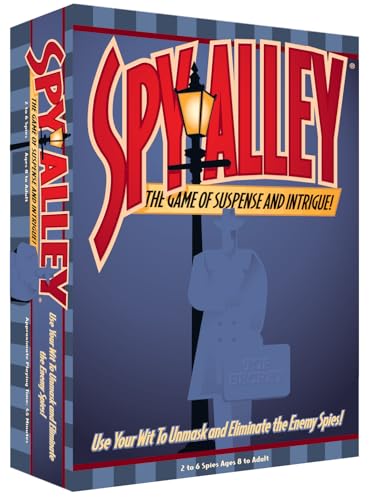 | Most Engaging | Age Range: 8+ | Player Count: 2-6 players | Primary Subject: Strategy/Social deduction | VIEW LATEST PRICE | Read Our Analysis |
| Monkey Life Educational Family Game Ages 7 | Best Portability | Age Range: 7+ | Player Count: 2-6 players | Primary Subject: Math skills | VIEW LATEST PRICE | Read Our Analysis | |
| Number Park Math Board Game for Kids Ages 5-8 |  | Best For Beginners | Age Range: 5-8 (Kindergarten-3rd Grade) | Player Count: 2-4 players | Primary Subject: Addition & subtraction | VIEW LATEST PRICE | Read Our Analysis |
| Scholastic Race Across USA Geography Board Game |  | Best Geography Game | Age Range: 8+ | Player Count: 2-4 players | Primary Subject: U.S. geography | VIEW LATEST PRICE | Read Our Analysis |
| Number Hunter Math Board Game for Kids Ages 4-8 | 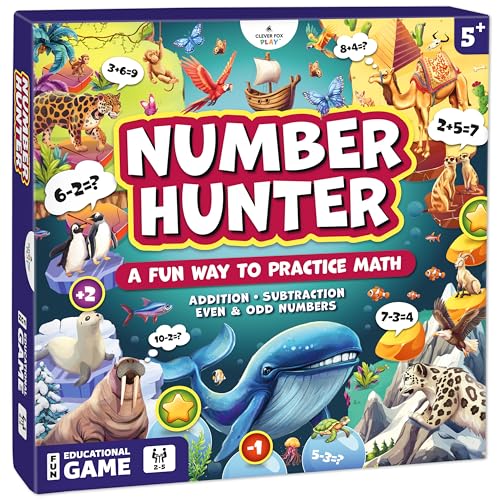 | Best Value | Age Range: 4-8 (Preschool-3rd Grade) | Player Count: Not specified | Primary Subject: Addition & subtraction | VIEW LATEST PRICE | Read Our Analysis |
| Teacher Created Resources SpellChecked Card Game (EP66111) |  | Best Spelling Game | Age Range: 8+ (Grades 3+) | Player Count: 2-8 players (groups) | Primary Subject: Spelling | VIEW LATEST PRICE | Read Our Analysis |
| Wordplay for Kids – Fast-Paced Word Game |  | Editor’s Choice | Age Range: 6-12 | Player Count: Not specified | Primary Subject: Vocabulary/Word-building | VIEW LATEST PRICE | Read Our Analysis |
| Learning Resources Money Bags Coin Value Game |  | Best Money Skills | Age Range: Not specified | Player Count: Not specified | Primary Subject: Money/Financial literacy | VIEW LATEST PRICE | Read Our Analysis |
| Learning Resources Math Island Addition & Subtraction Game | 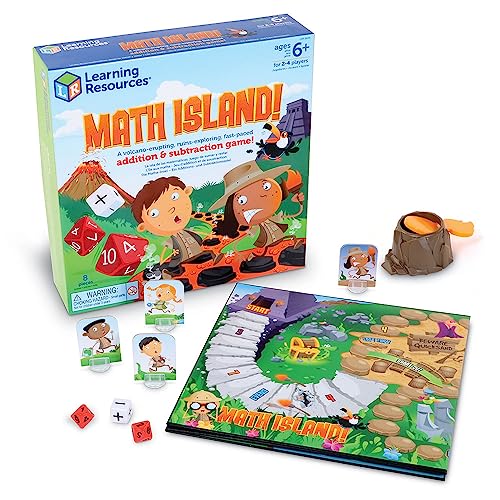 | Best Math Game | Age Range: 6+ | Player Count: 2-4 players | Primary Subject: Addition & subtraction | VIEW LATEST PRICE | Read Our Analysis |
More Details on Our Top Picks
Escape Room Puzzle Game: Baron Witch & Thief
Looking for an immersive learning experience that challenges teens to think critically while keeping them engaged for hours? Escape Room The Game Puzzle Adventures: The Baron, The Witch and The Thief combines jigsaw puzzles with escape room riddles in one story-driven mystery. Your teen solves puzzles across five rooms packaged like an advent calendar, earning pieces to complete a large house puzzle. They’ll develop problem-solving skills while working through riddles using the included decoder. Designed for ages 16+, it accommodates solo or group play with optional time pressure. With 4.4-star reviews from 832 customers, this educational game keeps homeschoolers engaged year-round.
- Age Range:16+
- Player Count:1+
- Primary Subject:Logic/Problem-solving
- Play Duration:Variable (with/without timer)
- Customer Rating:4.4/5 (832 reviews)
- Language Options:English
- Additional Feature:Advent calendar-style packaging
- Additional Feature:Puzzle decoder included
- Additional Feature:Story-driven mystery experience
Spy Alley Strategy & Bluffing Board Game
Spy Alley delivers award-winning social deduction gameplay that’s perfect for homeschooling families seeking a board game that sharpens critical thinking skills while maintaining high entertainment value year-round. Your kids will develop strategic reasoning and deductive logic as they assume hidden spy identities, bluff opponents, and unmask rival agents. This Mensa-approved game accommodates 2-6 players ages 8+, making it ideal for mixed-age siblings. With over 30 years of proven gameplay, it’s earned recognition as Australian Game of the Year and topped Chicago Tribune’s best games list. The espionage theme captivates teens and adults alike, ensuring your homeschool game collection stays engaging through every season.
- Age Range:8+
- Player Count:2-6 players
- Primary Subject:Strategy/Social deduction
- Play Duration:Not specified
- Customer Rating:4.6/5 (2,326 reviews)
- Language Options:English
- Additional Feature:Mensa Best Mind winner
- Additional Feature:Hidden identity gameplay
- Additional Feature:30+ years timeless classic
Monkey Life Educational Family Game Ages 7
Monkey Life stands out as the best educational board game for homeschooling families with children ages 7 and up who need a portable learning tool that develops math skills while keeping 2-6 players engaged. You’ll match banana colors and play higher-numbered cards while Wild Predator cards and five unique Action Cards add strategic depth. Your kids sharpen quick math skills, memory, and tactical thinking through color-dominant king mechanics that change each match. The water-repellent premium plastic cards and magnetic board withstand heavy use. Each 20-30-minute game from the 102-card deck delivers fresh strategies. The compact 8.8 x 6.9-inch design expands to a 16.5 x 23.6-inch play mat you’ll take anywhere.
- Age Range:7+
- Player Count:2-6 players
- Primary Subject:Math skills
- Play Duration:20-30 minutes
- Customer Rating:5.0/5 (4 reviews)
- Language Options:English, Spanish, Italian
- Additional Feature:Water-repellent plastic cards
- Additional Feature:Magnetic board and pawns
- Additional Feature:Foldable play mat included
Number Park Math Board Game for Kids Ages 5-8
Number Park transforms addition and subtraction practice into an exciting skateboard adventure through a colorful amusement park, making it an excellent choice for homeschooling families who need a math game that grows with their children. The game includes 78 math flash cards, a vibrant game board, four skateboard player pieces, and bilingual English-Spanish instructions. Designed by an elementary teacher, it adapts to different skill levels from kindergarten through third grade, allowing siblings at varying math abilities to play together. You’ll appreciate how it combines friendly competition with hands-on learning, building confidence and STEM interest while reinforcing core math concepts in your homeschool routine.
- Age Range:5-8 (Kindergarten-3rd Grade)
- Player Count:2-4 players
- Primary Subject:Addition & subtraction
- Play Duration:Not specified
- Customer Rating:Not specified
- Language Options:Bilingual English/Spanish
- Additional Feature:Skateboard player pieces
- Additional Feature:Vibrant amusement park theme
- Additional Feature:Elementary teacher designed
Scholastic Race Across USA Geography Board Game
Families seeking a geography game that adapts to multiple age levels will find the Scholastic Race Across USA Geography Board Game an exceptional choice for year-round homeschool learning. You’ll appreciate how grade-appropriate questions create even playing fields when teaching multiple children simultaneously. Players race across states answering geography questions matched to their academic level, making it perfect for mixed-age homeschool groups. The game develops critical thinking and problem-solving while your children explore U.S. geography hands-on. With hundreds of questions and a vibrant board, it’s designed for 2-4 players ages 8 and up, earning 4.6 stars from 1,519 customers who value its educational entertainment blend.
- Age Range:8+
- Player Count:2-4 players
- Primary Subject:U.S. geography
- Play Duration:Not specified
- Customer Rating:4.6/5 (1,519 reviews)
- Language Options:English
- Additional Feature:Grade-appropriate question scaling
- Additional Feature:Six states visitation goal
- Additional Feature:Scholastic partnership developed
Number Hunter Math Board Game for Kids Ages 4-8
Young learners who struggle with traditional math worksheets will thrive with this adventure-based board game that transforms arithmetic practice into an exciting challenge. Number Hunter makes addition and subtraction engaging for ages 4-8, whether you’re teaching kindergarten or third grade at home.
You’ll appreciate how the simple roll-and-solve gameplay keeps kids focused without screen time. The durable, non-toxic materials withstand enthusiastic daily use, while the competitive element motivates children to practice math skills repeatedly.
This STEM game works perfectly for individual lessons or family game nights, building number recognition and computational confidence through hands-on play that doesn’t feel like work.
- Age Range:4-8 (Preschool-3rd Grade)
- Player Count:Not specified
- Primary Subject:Addition & subtraction
- Play Duration:Not specified
- Customer Rating:Not specified
- Language Options:Not specified
- Additional Feature:Dice-based challenge system
- Additional Feature:Non-toxic child-safe materials
- Additional Feature:Screen-free STEM activity
Teacher Created Resources SpellChecked Card Game (EP66111)
Looking for a spelling game that adapts to multiple skill levels while keeping everyone engaged? Teacher Created Resources’ SpellChecked Card Game offers 8 color-coded decks across 4 ability levels for ages 8+. Players identify images and spell words using the first letter as a guide. If you misspell, flip the card to choose from three options—you’ll still earn points while learning from mistakes. More challenging decks award fewer points, balancing competition for 2-8 players. The first to reach 30 points wins. This portable 208-card game strengthens spelling pattern recognition and critical thinking, making it perfect for small-group homeschool sessions or Family Game Nights.
- Age Range:8+ (Grades 3+)
- Player Count:2-8 players (groups)
- Primary Subject:Spelling
- Play Duration:First to 30 points
- Customer Rating:Not specified
- Language Options:Not specified
- Additional Feature:8 color-coded decks
- Additional Feature:Image-aided word identification
- Additional Feature:Second-chance spelling format
Wordplay for Kids – Fast-Paced Word Game
How can homeschoolers transform vocabulary lessons into thrilling competitions that kids actually beg to play? Wordplay for Kids delivers exactly that—a Teachers Choice Award-winning game where students race against the clock to build words. You’ll spin a wheel revealing two required letters, roll dice for categories like “Food or Drink” or “Living Creature,” then frantically search your vocabulary. Longer words move you farther across the board, naturally motivating kids to stretch beyond simple answers. Perfect for ages 6-12, this fast-paced challenge sharpens spelling, expands vocabulary, and boosts focus without feeling like schoolwork. Family members can join, making it ideal for multi-age homeschool households.
- Age Range:6-12
- Player Count:Not specified
- Primary Subject:Vocabulary/Word-building
- Play Duration:Fast-paced rounds
- Customer Rating:Not specified
- Language Options:Not specified
- Additional Feature:Teachers Choice Award winner
- Additional Feature:Spin wheel letter reveal
- Additional Feature:Timer-based fast rounds
Learning Resources Money Bags Coin Value Game
The Learning Resources Money Bags Coin Value Game stands out as the best choice for homeschooling families who want to teach financial literacy through hands-on play rather than worksheets alone. Your children will collect, count, and exchange money as they race to the finish line, mastering real-world math skills through engaging gameplay.
The set includes a game board with spinner, 100 plastic coins, play bills, colorful markers, and dice. The pretend bills measure 6.25 x 2.625 inches, while coins range from .80 inches (penny) to .995 inches (quarter), providing realistic proportions for authentic learning.
This game transforms abstract money concepts into tangible experiences, making it perfect for year-round homeschool curriculum enrichment.
- Age Range:Not specified
- Player Count:Not specified
- Primary Subject:Money/Financial literacy
- Play Duration:Not specified
- Customer Rating:Not specified
- Language Options:Not specified
- Additional Feature:100 plastic coins included
- Additional Feature:Game board with spinner
- Additional Feature:Bills measure 6.25 x 2.625
Learning Resources Math Island Addition & Subtraction Game
Want to transform math drill sessions into engaging adventures your homeschooled children actually look forward to? Learning Resources Math Island Addition & Subtraction Game turns computation practice into an exciting volcano island quest. Your kids will solve addition and subtraction problems using two 10-sided number dice and an operation die, building mental math fluency through varied equations.
The volcano popper mechanism launches dice when players land on special spaces, creating thrilling moments that encourage repeated play. Designed for 2-4 players ages 6+, it’s perfect for siblings with different skill levels. The colorful board, adventure characters, and simple instructions make this game an effective, entertaining addition to your homeschool math curriculum.
- Age Range:6+
- Player Count:2-4 players
- Primary Subject:Addition & subtraction
- Play Duration:Not specified
- Customer Rating:Not specified
- Language Options:Not specified
- Additional Feature:Volcano popper dice launcher
- Additional Feature:10-sided number dice
- Additional Feature:4 adventure character pieces
Factors to Consider When Choosing Educational Board Games for Homeschooling
When you’re selecting educational board games for your homeschool, you’ll want to match the game’s complexity to your child’s current abilities while ensuring it aligns with the subjects you’re teaching. Consider whether the game works best for independent learning or requires multiple players, and check how long each session takes to fit within your daily schedule. Games with high replay value and adaptable difficulty levels will grow with your child and justify the investment.
Age-Appropriate Skill Level
How do you ensure a board game will engage rather than frustrate your homeschooler? Start by choosing games with explicit age ranges like 6+ or 7+, which signal developmental appropriateness. Match the game’s complexity to your child’s reading level and counting ability—if they can’t follow instructions independently, the game’s too advanced.
Look for scalable difficulty options or multi-level decks that let players start simple and progress as skills develop. Games accommodating varied player counts (2–4 or 2–6) work well for mixed-age homeschool settings, letting siblings play together despite different abilities.
Check whether the game targets specific skills—addition practice, vocabulary building, or pattern recognition—that align with your curriculum goals. This ensures the challenge level supports actual learning rather than simply filling time.
Subject Area Alignment
Matching a board game’s content to your homeschool curriculum transforms playtime into targeted instruction. Choose games whose core challenges align with your focus subjects—math-focused games for arithmetic practice, geography-themed games for map skills, language-based games for spelling and vocabulary development.
Review the publisher’s listed learning outcomes. Look for explicit skill-builds like addition/subtraction practice, number recognition, or geography question sets. The best educational games integrate academic content directly into gameplay mechanics, so your child practices math or literacy concepts through active play rather than passive absorption.
Verify the game’s difficulty matches your learner’s current level—beginner, intermediate, or advanced. Games offering progression paths or multiple skill tracks grow with your student. If you’re teaching multiple languages, bilingual instructions can reinforce subject-area learning while improving accessibility.
Solo Versus Group Play
Your homeschool setting determines whether you need games designed for solo learners or group dynamics. Solo play requires clear single-player objectives, scalable difficulty, explicit learning goals, and trackable progress so you can monitor individual growth. These games emphasize independent pacing and personal challenge with built-in feedback mechanisms.
Group-play games supporting 2–6 players foster discussion, teamwork, and shared problem-solving through social deduction, collaboration, and multiplayer mechanics. Choose titles with structured progression or multiple activities to accommodate varying skill levels within a single session. Look for adjustable time limits or modes that match different attention spans in group settings.
For homeschools mixing solo and group learners, select games offering both modes or maintain separate collections tailored to each learning environment.
Game Duration and Pacing
When selecting educational board games, session length directly impacts how effectively they fit into your homeschool day. You’ll want a mix of short sessions (20–30 minutes) and longer blocks to match varied attention spans and accommodate different subjects. Games with clear pacing cues—like turn counts or timer rounds—help you manage transitions between activities smoothly.
Look for titles offering flexible play options: solo, small groups, or whole-class formats adapt to your specific setup. Prioritize games with incremental difficulty and extension activities that grow alongside your math, reading, or geography curriculum. Games featuring simultaneous engagement through multi-player or cooperative modes keep everyone active, maximizing instructional time. This approach ensures you’re not waiting for turns while other students disengage, maintaining momentum throughout your lesson.
Replay Value and Adaptability
How many times will your students play a game before it loses its appeal? Choose games with extensive replay value—look for 102-card decks or multiple rooms and puzzles that create fresh strategies each session. You’ll maximize your investment when games offer scalable player counts (2–6 players) and adjustable difficulty levels to match different ages and learning paces.
Seek varied game modes that support both quick 20–30 minute rounds and longer strategic sessions, accommodating your homeschooling schedule and students’ attention spans. Durable components like water-repellent cards or magnetic boards withstand frequent use. Games reinforcing multiple skills—math, vocabulary, geography, or critical thinking—sustain engagement across repeated play without feeling redundant. This adaptability ensures the game grows with your students throughout the year.
Frequently Asked Questions
How Do You Integrate Board Games Into a Structured Homeschool Curriculum?
You’ll schedule games during specific subject times—use math games for arithmetic practice, history games during social studies, and strategy games for critical thinking. Dedicate 30-45 minutes per session, tracking skills developed through gameplay as part of your lesson plans.
What Age Ranges Work Best for Multi-Child Gameplay With Educational Games?
You’ll find the sweetest spot with siblings aged 6-12, where older kids can mentor younger ones. Games with adjustable difficulty levels work brilliantly when your age spread exceeds three years between children.
How Often Should Educational Board Games Be Rotated to Maintain Engagement?
You’ll maintain peak engagement by rotating games every 2-3 weeks. Keep 3-4 games in active rotation while storing others away. When you notice declining enthusiasm or repeated strategies, it’s time to swap in fresh options.
Can Educational Board Games Fulfill State Homeschool Requirements for Subjects?
You’ll need to check your state’s specific homeschool laws, but many educational board games can supplement required subjects when you properly document gameplay as part of your curriculum and learning objectives.
Where Can Homeschoolers Find Reviews From Other Homeschooling Families?
You’ll find reviews from other homeschooling families on dedicated forums like Well-Trained Mind, Homeschool World, and The Homeschool Lounge. Facebook groups, homeschool co-ops, and blogs also provide authentic parent perspectives on educational games.



Leave a Reply