
You’ve probably noticed that most “cooperative” games still leave kids arguing over who gets to go first or celebrating individual wins. The problem isn’t the concept—it’s that many games slap a cooperative label on competitive mechanics and hope for the best. Real teamwork requires deliberate design: games that force players to communicate clearly, share resources strategically, and succeed or fail as a unit. Here’s what actually works.
| Peaceable Kingdom Race to the Treasure! Cooperative Game | 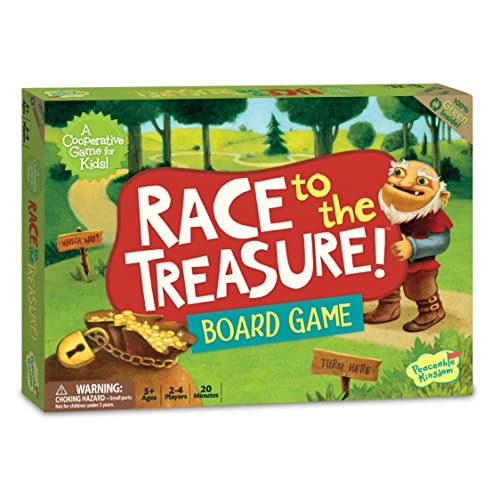 | Best Overall | Player Count: 2-4 players | Age Recommendation: Ages 5+ | Game Duration: Not specified | VIEW LATEST PRICE | Read Our Analysis |
| Peaceable Kingdom Money Bunch Cooperative Money Game |  | Best Educational Value | Player Count: Not specified | Age Recommendation: Not specified | Game Duration: Not specified | VIEW LATEST PRICE | Read Our Analysis |
| Peaceable Kingdom Gnomes at Night Cooperative Maze Game | 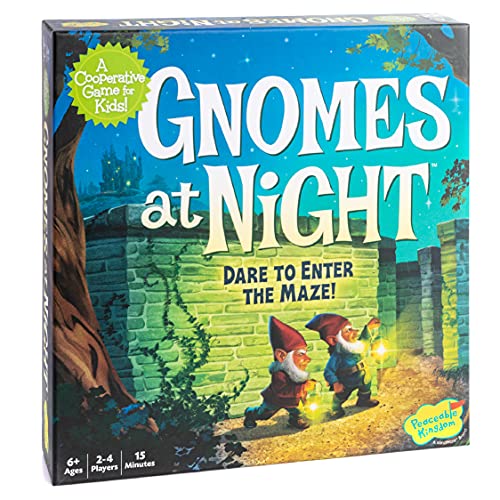 | Best For Communication | Player Count: 2-4 players | Age Recommendation: Ages 6+ | Game Duration: Quick-thinking/timed (sand timer included) | VIEW LATEST PRICE | Read Our Analysis |
| Peaceable Kingdom Space Escape Cooperative Strategy Game |  | Most Strategic | Player Count: 2-4 players | Age Recommendation: Ages 7+ | Game Duration: Not specified | VIEW LATEST PRICE | Read Our Analysis |
| Scorpion Masqué Sky Team 2-Player Cooperative Game |  | Best For Adults | Player Count: 2 players | Age Recommendation: Ages 14+ | Game Duration: 20 minutes | VIEW LATEST PRICE | Read Our Analysis |
| OUTFOXED A CLASSIC WHO DUNNIT GAME FOR PRESCHOOLERS 4 players | 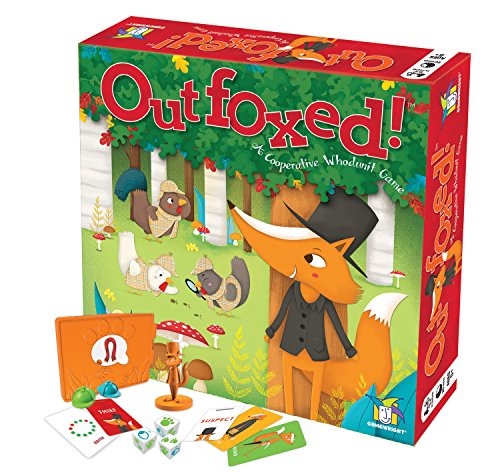 | Best For Preschoolers | Player Count: 4 players | Age Recommendation: Ages 4+ | Game Duration: Not specified | VIEW LATEST PRICE | Read Our Analysis |
| Peaceable Kingdom Hoot Owl Hoot – Cooperative Matching Game For Kids |  | Best For Beginners | Player Count: 2-4 players | Age Recommendation: Ages 4-8 | Game Duration: Not specified | VIEW LATEST PRICE | Read Our Analysis |
More Details on Our Top Picks
Peaceable Kingdom Race to the Treasure! Cooperative Game
The game teaches strategy and problem-solving while developing social skills through teamwork. With four major awards including the Oppenheim Toy Portfolio Platinum Award, it’s proven effective. Parents appreciate the frustration-free packaging and no-reading requirement. The 4.8-star rating from over 3,000 reviews confirms its popularity among families seeking authentic collaborative play experiences.
- Player Count:2-4 players
- Age Recommendation:Ages 5+
- Game Duration:Not specified
- Core Learning Skill:Strategy and social development
- Game Theme:Race to treasure against Ogre
- Reading Required:No reading required
- Additional Feature:Four award winner
- Additional Feature:Frustration-free packaging
- Additional Feature:Path building mechanic
Peaceable Kingdom Money Bunch Cooperative Money Game
While most cooperative games focus solely on winning together, Peaceable Kingdom’s Money Bunch stands out as the best choice for parents who want their children to learn financial literacy alongside teamwork skills. You’ll guide your kids through an engaging neighborhood adventure where they ride bikes, earn money, and make crucial decisions about saving, spending, and sharing.
The cooperative objective requires players to collectively fund a community playground while managing individual goals like buying snacks and saving for new bikes. With spinners, money trackers, dollar bills, quarters, and playground equipment pieces, your children will practice real budgeting scenarios. They’ll develop critical thinking through collaborative decision-making, learning responsible money management while working together toward a shared community goal.
- Player Count:Not specified
- Age Recommendation:Not specified
- Game Duration:Not specified
- Core Learning Skill:Financial literacy and money management
- Game Theme:Money management bike adventure
- Reading Required:Not specified
- Additional Feature:Includes real money pieces
- Additional Feature:Bicycle customization accessories
- Additional Feature:Neighborhood bike-riding theme
Peaceable Kingdom Gnomes at Night Cooperative Maze Game
Young children aged 6 and up will find their perfect introduction to cooperative gaming in Peaceable Kingdom’s Gnomes at Night, a magnetic maze adventure that transforms spatial reasoning into a thrilling race against time. You’ll work together to recover the Queen’s stolen treasures before sunrise, maneuvering magnetic gnomes through increasingly complex mazes. Here’s the twist: walls that block your path don’t exist for players on the opposite side, forcing teammates to guide each other using precise directional language. With four difficulty levels and a sand timer adding urgency, you’ll develop communication skills, perspective-taking abilities, and strategic thinking while racing to locate twelve hidden treasures cooperatively.
- Player Count:2-4 players
- Age Recommendation:Ages 6+
- Game Duration:Quick-thinking/timed (sand timer included)
- Core Learning Skill:Communication and teamwork
- Game Theme:Gnomes searching maze for treasures
- Reading Required:Not specified
- Additional Feature:Magnetic gnome movers
- Additional Feature:Four difficulty levels
- Additional Feature:Double-sided maze board
Peaceable Kingdom Space Escape Cooperative Strategy Game
Designed by the inventor of Pandemic, Space Escape delivers Matt Leacock’s proven cooperative gameplay expertise in a family-friendly package perfect for introducing younger players (ages 7+) to strategic teamwork. You’ll help Mole Rats gather equipment and reach their escape pod before invading snakes take over the space station. Each card you draw presents two actions—one benefiting you, one helping the snakes—requiring your team to communicate and strategize together about which Mole Rats to move and where snakes should advance. This shared decision-making builds real problem-solving skills while teaching kids that everyone wins or loses together, making it ideal for families and classrooms focused on developing emotional intelligence and community.
- Player Count:2-4 players
- Age Recommendation:Ages 7+
- Game Duration:Not specified
- Core Learning Skill:Teamwork and creative problem-solving
- Game Theme:Mole rats escaping space station from snakes
- Reading Required:Not specified
- Additional Feature:Pandemic inventor created
- Additional Feature:Challenge mode included
- Additional Feature:Mole rats versus snakes
Scorpion Masqué Sky Team 2-Player Cooperative Game
Sky Team earns its Game of the Year 2024 title by delivering something rare: a cooperative experience that genuinely requires two players to function as a cohesive unit. You’ll land planes at airports worldwide while managing speed, air traffic, wing levels, and brakes through dice-based decisions.
The brilliance lies in forced trust—you strategize between rounds, then execute independently once dice are rolled. Your co-pilot can’t help mid-turn, demanding precise communication beforehand.
Twenty scenarios across notable airports introduce unique challenges, while optional modules add complications like fuel leaks and icy runways. The immersive cockpit components and 20-minute sessions make mastering pilot-copilot coordination addictively replayable.
- Player Count:2 players
- Age Recommendation:Ages 14+
- Game Duration:20 minutes
- Core Learning Skill:Trust and cooperative strategy
- Game Theme:Pilots landing airplane
- Reading Required:Not specified
- Additional Feature:Game of Year 2024
- Additional Feature:Twenty airport scenarios
- Additional Feature:Immersive cockpit components
OUTFOXED A CLASSIC WHO DUNNIT GAME FOR PRESCHOOLERS 4 players
Why settle for basic board games when preschoolers can solve mysteries together? Outfoxed transforms your 4-year-old into a detective working with three teammates to catch a pie-stealing fox. Your crew travels the board gathering clues, using the evidence scanner to identify what the guilty suspect wears, then eliminating innocent foxes until you’ve cracked the case.
This whodunit teaches critical thinking through collaborative problem-solving. Your preschoolers practice turn-taking while determining who committed the crime and where they’re hiding. The gentle mystery format introduces logic skills without frustration, making rainy days and playdates engaging learning experiences that build communication abilities.
- Player Count:4 players
- Age Recommendation:Ages 4+
- Game Duration:Not specified
- Core Learning Skill:Logic and problem-solving
- Game Theme:Mystery whodunit with fox suspects
- Reading Required:Not specified
- Additional Feature:Evidence scanner included
- Additional Feature:Mystery whodunit format
- Additional Feature:Fox suspect elimination
Peaceable Kingdom Hoot Owl Hoot – Cooperative Matching Game For Kids
When you’re introducing preschoolers to cooperative gaming, Peaceable Kingdom’s Hoot Owl Hoot stands out as the ideal starting point for ages 4-8. You’ll help 2-4 players guide six owls home before sunrise by matching color cards to board spaces. What makes this brilliant is you can move any owl on your turn, encouraging collaborative strategy discussions among players.
The game builds essential skills like following directions, taking turns, and creative problem-solving while fostering positive self-esteem through shared decision-making. Two difficulty levels let older kids play alongside younger ones, creating a non-stressful environment where everyone wins together. It’s cooperative gameplay that genuinely develops emotional growth and community-building skills.
- Player Count:2-4 players
- Age Recommendation:Ages 4-8
- Game Duration:Not specified
- Core Learning Skill:Simple strategy and shared decision making
- Game Theme:Owls flying home before sunrise
- Reading Required:Not specified
- Additional Feature:Two difficulty versions
- Additional Feature:Sun/color card system
- Additional Feature:Six owl tokens
Factors to Consider When Choosing Cooperative Games for Teaching Teamwork
When you’re selecting cooperative games to build teamwork skills, you’ll need to match the game’s complexity with your players’ ages and abilities. Consider how many people can play simultaneously, what communication skills the game demands, and whether the session length fits your available time. Most importantly, identify which specific learning objectives—like problem-solving, active listening, or strategic planning—align with the teamwork skills you want to develop.
Age-Appropriate Complexity Levels
Choosing a cooperative game with the right complexity level ensures everyone can meaningfully participate and learn teamwork skills without frustration or boredom. You’ll want to select games with stated age ranges that match your players’ developmental stages—look for labels like 4–8, 5+, or 7+ as indicators of rule complexity and reading requirements.
For younger children (ages 4–6), prioritize games featuring simple turn-taking and basic rule-following. Older players (ages 7–12) can handle strategy and planning elements. You should choose games explicitly designed for teamwork rather than competitive play to reinforce collaboration and communication skills.
Consider games with progression options or multiple difficulty levels, allowing mixed-age groups to play together effectively. Look for mechanics requiring flexible thinking and verbal guidance, like describing moves or coordinating actions, to support social development.
Number of Players Supported
The number of players a game supports directly impacts how your group practices communication, decision-making, and shared responsibility. Cooperative games range from 2-player titles that foster pair-based collaboration to 4+ player experiences requiring broader group coordination. Two-player games excel at teaching focused partnership skills, while three or four-player options introduce more complex team dynamics and communication scaling.
Before purchasing, verify the stated player range matches your group size to avoid exclusion or forced solo play. Games supporting 2–4 players offer the most flexibility, accommodating mixed-age groups or evolving team sizes. This adaptability lets you practice collaborative skills across different scenarios and participant combinations.
For teaching teamwork effectively, flexible player counts ensure everyone participates meaningfully. The right range maintains engagement by balancing shared decision-making with individual turns, preventing anyone from becoming a passive observer.
Communication Skills Required
Player count sets the stage for interaction, but how well your team communicates determines success in cooperative games. Look for games requiring descriptive language—those where you’ll give explicit directions using terms like “left,” “right,” “up,” or “down” to guide teammates toward targets.
Effective cooperative games push you to clarify intentions, negotiate moves, and share decisions before acting. Turn-based formats work especially well, forcing your group to discuss strategies and build shared plans rather than rushing ahead independently.
Choose games with nonverbal cues like token movements or board paths that spark dialogue. Structured rules and defined roles help you practice coordinating messages, prioritizing group objectives over individual wins, and delivering clear, concise instructions that keep everyone aligned toward your common goal.
Game Duration and Pacing
How long should your cooperative game last? Most cooperative games work best in 15–30 minute sessions, maintaining teamwork momentum without exhausting players. This duration keeps everyone engaged while preventing attention from drifting.
Consider your players’ ages when selecting game length. Younger participants need shorter sessions—typically 10–20 minutes—to match their attention spans and reduce frustration. Adults can handle longer strategic planning, but even experienced teams benefit from brisk pacing.
Look for games with simultaneous or flexible turns to minimize downtime. You’ll want clear, rapid feedback showing your group’s progress toward shared goals. Games offering scalable difficulty or challenge modes let you adjust pacing as your team’s skills improve, ensuring the experience remains engaging without creating bottlenecks that stall collaborative decision-making.
Educational Learning Objectives
Beyond keeping sessions engaging, you need games that deliver specific learning outcomes aligned with your teamwork goals. Look for titles that explicitly develop communication skills through collaborative planning and in-game dialogue. The best cooperative games require shared decision-making and turn-taking, ensuring every participant contributes to group strategy.
Problem-solving components should encourage collective discussion rather than individual solutions. You’ll want games that foster emotional growth through supportive interactions and patience, creating non-stressful environments where mistakes become learning opportunities.
Choose titles offering multiple difficulty levels or variants that accommodate different ages and skill levels. This progression challenges players to coordinate across varying abilities while maintaining inclusive participation. Games emphasizing these educational objectives transform play into genuine teamwork development, building competencies that extend beyond the game itself.
Frequently Asked Questions
Can Cooperative Games Help Reduce Sibling Rivalry During Family Game Nights?
Yes, cooperative games can considerably reduce sibling rivalry by shifting focus from competing against each other to working together toward shared goals. You’ll notice siblings learn to communicate better, celebrate joint victories, and develop mutual respect through collaborative play.
What Age Should Children Start Playing Cooperative Games for Best Results?
You can start introducing cooperative games around age 3-4 with simple activities. However, children aged 6-8 typically grasp teamwork concepts better, making this the ideal age range for meaningful cooperative gameplay that’ll teach lasting collaboration skills.
How Do Cooperative Games Compare to Team Sports for Teaching Teamwork?
You’ll find cooperative games offer more frequent decision-making and problem-solving than team sports, which often have dominant players. However, sports provide physical teamwork under pressure. Both methods complement each other effectively for all-encompassing teamwork development.
Can Adults Benefit From Playing Cooperative Games Designed for Children?
You’ll absolutely benefit from children’s cooperative games as an adult. They’re stripped of complexity, letting you focus purely on communication and collaboration fundamentals. You’ll often discover gaps in your teamwork skills you didn’t know existed.
How Often Should Families Play Cooperative Games to See Behavioral Improvements?
You’ll notice behavioral improvements when you play cooperative games 2-3 times weekly for at least four weeks. Consistency matters more than duration—even 20-minute sessions work if you’re maintaining regular family game nights together.



Leave a Reply